United States of America

United States of America
The growing interest in peptide research has led to questions about compounds marketed for body composition, fat metabolism, and related biological processes. The term lemon bottle peptide has gained attention in online discussions, yet understanding the product requires a closer look at its name, ingredients, and research claims.
At Serendipity Research Peptides, we believe informed research starts with accurate product information. Researchers need to understand the difference between a product’s marketing name and its verified chemical identity. This distinction helps support better product evaluation, research planning, and scientific understanding.
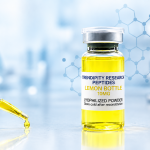
Lemon Bottle is a name associated with an injectable product marketed for fat-dissolving cosmetic treatments. It should not be confused with a single, clearly established peptide molecule. Understanding this difference is the first step toward examining its composition and scientific background.
Despite its popular name, lemon bottle peptide is not a single, well-defined peptide molecule. Our product information identifies Lemon Bottle as a lipolytic solution associated with cosmetic body-contouring research. Its product name describes a commercial formulation rather than a specific peptide sequence.
Peptides are short chains of amino acids. They play roles in biological processes, including cell signaling, hormone activity, and protein interactions. Lemon Bottle belongs to a different category based on its marketed formulation.
The distinction matters in laboratory research. A researcher studying a peptide needs its molecular identity, sequence, purity, and other relevant specifications. A mixed solution requires a different approach to ingredient analysis and experimental design.
Product descriptions commonly list three main ingredients in the Lemon Bottle formula. Each has distinct chemical properties and a separate research background.
These ingredients provide a starting point for understanding the product’s advertised composition. However, a list of ingredients does not confirm the exact contents of every batch. Swissmedic, Switzerland’s medicines regulator, reported differences between the declared ingredients and substances found in tested samples.
Researchers should therefore review product documentation and independent laboratory results before drawing conclusions about a formulation.
A sound research plan starts with reliable product identification. Rather than relying on a product name alone, researchers should examine the available technical details and quality records.
Key factors include:
These checks support better documentation and help researchers interpret results with greater care.
Research on bromelain, lecithin, and riboflavin provides information about their individual properties. However, findings about one ingredient do not establish the effects of a complete commercial mixture.
The available regulatory evidence also highlights the importance of verifying the product itself. Swissmedic reported that tested Lemon Bottle samples did not consistently match their declared composition.
Consequently, researchers should distinguish established facts about individual ingredients from claims about the full formulation. This approach supports accurate scientific reporting and sound experimental decisions.
At Serendipity Research Peptides, we value clear product information and informed research choices. Anyone exploring peptides for sale online should review product descriptions, available specifications, quality documentation, and intended-use information before selecting research materials.
The same principle applies when evaluating lemon bottle peptide. A familiar name does not replace verified chemical information. Researchers benefit from understanding exactly what a product contains and which scientific questions it suits.
Explore our product range at Serendipity Research Peptides to learn more about research materials and their listed specifications.
Scientific research starts with informed choices and reliable product information. Check out Serendipity Research Peptides to explore our range, review available product details, and identify research materials that match your laboratory requirements.
No. Lemon Bottle is a commercial name for a lipolytic solution, not a single peptide with a defined amino acid sequence. Its listed ingredients include bromelain, lecithin, and riboflavin, which belong to different chemical categories.
Product descriptions list bromelain, lecithin, and riboflavin among the main ingredients. These substances have different properties and research backgrounds. Researchers should check product-specific documentation to verify the stated composition and batch details.
Lemon Bottle attracts attention due to its marketing as a fat-dissolving solution. Researchers examining the subject need to distinguish ingredient-level science from evidence about the complete formulation, including its composition, quality, and biological effects.
Researchers should review ingredient details, batch identification, analytical testing, purity documentation, and the intended research purpose. Independent verification helps establish product identity and supports accurate interpretation of experimental results.
Start by checking the supplier’s product specifications, chemical identity, purity claims, and available laboratory documentation. Confirm the intended use and applicable regulations as well. Reliable records support informed purchasing decisions and better research planning.

© 2026 Serendipity Research Peptides | Design & Developed By : Digital Guider
Serendipity Research Peptides is dedicated to supporting scientific innovation by supplying high-purity, research-grade peptides to the global scientific community.