United States of America

United States of America
$40.00
49 in stock
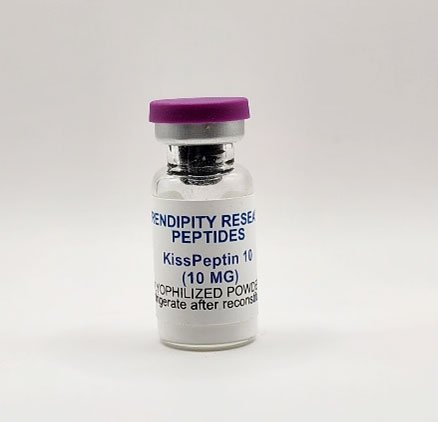
Kisspeptin is a small neuropeptide produced primarily by neurons in the hypothalamus and encoded by the KISS1 gene peptidedeck.com+1. Originally discovered in 1996 as a metastasis-suppressor gene, its most critical role is in reproductive hormone regulation peptidedeck.com+1. Kisspeptin binds to the GPR54 receptor (KISS1R) on gonadotropin-releasing hormone (GnRH) neurons, triggering the release of GnRH, which then stimulates the pituitary to secrete luteinizing hormone (LH) and follicle-stimulating hormone (FSH) scienceinsights.org+1. This hierarchical signaling—Kisspeptin → GnRH → LH/FSH—is essential for sexual maturation, gametogenesis, and fertility Wikipedia.
Kisspeptin neurons release the peptide in pulsatile patterns, which is crucial for proper GnRH secretion scienceinsights.org+1. Upon binding to KISS1R, intracellular signaling cascades involving Gq protein coupling, phospholipase C activation, and IP3-mediated calcium release are triggered, leading to GnRH neuron activation spartanpeptides.com. This upstream regulation ensures the entire hypothalamic-pituitary-gonadal (HPG) axis functions correctly, controlling testosterone in males, estrogen in females, and overall reproductive health peptidedeck.com+1.
The KISS1 gene produces a 145-amino-acid precursor protein, which is cleaved into several active fragments, including kisspeptin-54, kisspeptin-14, kisspeptin-13, and the commonly studied kisspeptin-10 Wikipedia. Kisspeptin-10, despite being the shortest fragment, retains full biological activity and is widely used in research and clinical protocols cellpeptides.com.
Kisspeptin is being studied for hypogonadotropic hypogonadism, male hormonal decline, and fertility treatments peptidedeck.com+1. Clinical studies have demonstrated that kisspeptin administration produces measurable LH and FSH pulses, confirming its role as a central regulator of reproductive endocrinology spartanpeptides.com. Its ability to act at the top of the HPG axis makes it a promising tool for both diagnostic and therapeutic purposes, including kisspeptin challenge tests to identify the source of reproductive hormone deficiencies cellpeptides.com.
In summary, kisspeptin is a pivotal neuropeptide that orchestrates reproductive hormone signaling, puberty, fertility, and sexual function, with growing clinical relevance in reproductive medicine and hormone regulation.
Price range: $15.00 through $30.00
Select options This product has multiple variants. The options may be chosen on the product page© 2026 Serendipity Research Peptides | Design & Developed By : Digital Guider
Serendipity Research Peptides is dedicated to supporting scientific innovation by supplying high-purity, research-grade peptides to the global scientific community.



Reviews
There are no reviews yet.