United States of America

United States of America
$20.00
22 in stock
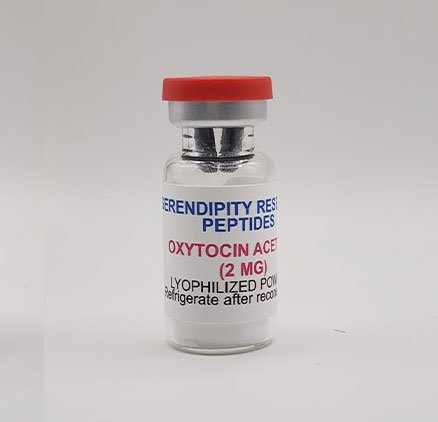
Oxytocin is a nine-amino-acid peptide hormone and neuropeptide that regulates social bonding, reproduction, stress, and emotional behavior.
What is Oxytocin Peptide
Oxytocin is a nonapeptide, meaning it consists of nine amino acids arranged in the sequence Cys-Tyr-Ile-Gln-Asn-Cys-Pro-Leu-Gly, with a disulfide bridge between the two cysteine residues forming a cyclic structure essential for receptor binding and biological activity. It is synthesized in the paraventricular and supraoptic nuclei of the hypothalamus and stored in the posterior pituitary gland for release into the bloodstream or directly into the brain. Oxytocin acts as a chemical messenger, influencing multiple organs including the brain, uterus, mammary glands, and cardiovascular system.
Biological Functions
Oxytocin plays a central role in social and reproductive behaviors:
Social bonding and trust: Enhances in-group trust, cooperation, and emotional salience of social interactions.
Stress and anxiety regulation: Reduces amygdala reactivity, lowers cortisol levels, and improves stress resilience.
Reproduction: Triggers uterine contractions during labor and milk ejection during breastfeeding.
Sexual function: Increases sexual arousal, orgasm intensity, and relationship satisfaction.
Pain modulation and cardiovascular effects: Influences pain perception and supports cardiovascular health
Oxytocin also interacts with the autonomic and immune systems, modulating the hypothalamic-pituitary-adrenal (HPA) axis, balancing cortisol, and exhibiting anti-inflammatory and antioxidant effects.
Mechanism of Action
Oxytocin binds to oxytocin receptors distributed throughout the body and brain, triggering signaling cascades that affect behavior, mood, and physiological processes. Central release within the brain primarily drives behavioral effects, while peripheral release into the bloodstream mediates reproductive and cardiovascular functions. Its effects are context-dependent, influenced by receptor density, baseline hormone levels, and social environment.
Clinical and Research Applications
Oxytocin has been studied for:
Autism spectrum disorder: Enhancing social cognition and emotional recognition.
Anxiety and depression: Reducing stress and improving mood.
Chronic pain and sexual dysfunction: Modulating pain perception and sexual response.
Pharmaceutical forms, such as Pitocin and Syntocinon, are used to induce labor and manage postpartum hemorrhage, while intranasal administration is explored for behavioral and neuropsychiatric effects.
Summary
Oxytocin peptide is a versatile neuropeptide hormone that influences social behavior, reproduction, stress response, and physiological health. Its dual central and peripheral actions make it a key regulator of both emotional and bodily functions, and ongoing research continues to explore its therapeutic potential in mental health, social cognition, and reproductive medicine.
Price range: $35.00 through $55.00
Select options This product has multiple variants. The options may be chosen on the product page© 2026 Serendipity Research Peptides | Design & Developed By : Digital Guider
Serendipity Research Peptides is dedicated to supporting scientific innovation by supplying high-purity, research-grade peptides to the global scientific community.




Reviews
There are no reviews yet.